

How to Keep Your Elevator Running Through Power Cuts in Lebanon?

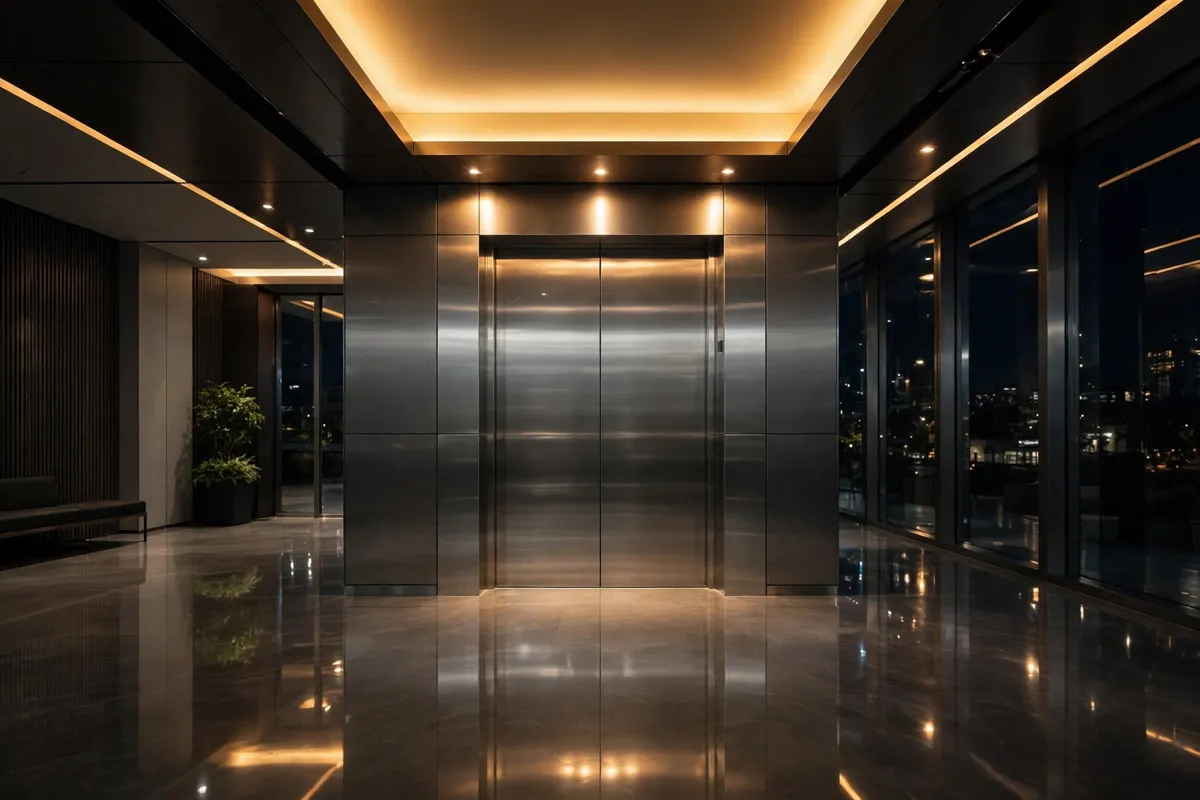
Power cuts are part of daily life in Lebanon. The mains supply drops, the private generator takes over, and most of the building keeps going. But for many buildings, the elevator is the one thing that stops. If you live or work above the ground floor, that is the moment the power cut becomes a real problem.
This guide explains how to keep your elevator running through power cuts in Lebanon. You will learn why lifts stop, what an ARD does, how battery backup and generators compare, whether solar helps, what to do if you get stuck, and how to get power cut protection for your building. Everything here is written for Lebanese buildings, where the power supply switches between the mains, a generator, and sometimes solar.
Why Do Elevators Stop When the Power Cuts in Lebanon?
An elevator stops during a power cut because its motor, control panel, and safety circuits all run on mains electricity. When the supply drops, the lift loses drive power and stops where it is, usually between floors, until power returns or a rescue device takes over.
How the mains supply works in a Lebanese building
Most buildings in Lebanon run on two sources of power. The first is the state supply from Electricite du Liban, which is unreliable and cuts out for hours every day in many areas. The second is a private generator, either the building’s own generator or a neighbourhood generator subscription, which starts when the mains fails. The changeover between the two is not instant, and the elevator feels that gap more than any other equipment in the building.
What happens in the first seconds of a cut
When the mains fails, the elevator controller detects the loss of voltage and stops the lift at once. The brakes engage, the cabin lights switch to a small emergency battery, and the doors stay shut. This is by design. A lift must never keep moving on a failing supply, because an uncontrolled stop could hurt the passengers inside. The lift waits for a stable supply before it moves again.
Why older lifts stop where they are
Older elevators in Lebanon often have no rescue device at all. When the power goes, the cabin simply stops between floors and stays there until the generator supply reaches the lift or the mains returns. That is why elevator modernization in Lebanon often starts with the power supply: a modern controller and a rescue device change the whole experience of a power cut.
What Is an ARD and How Does It Keep Your Elevator Moving?
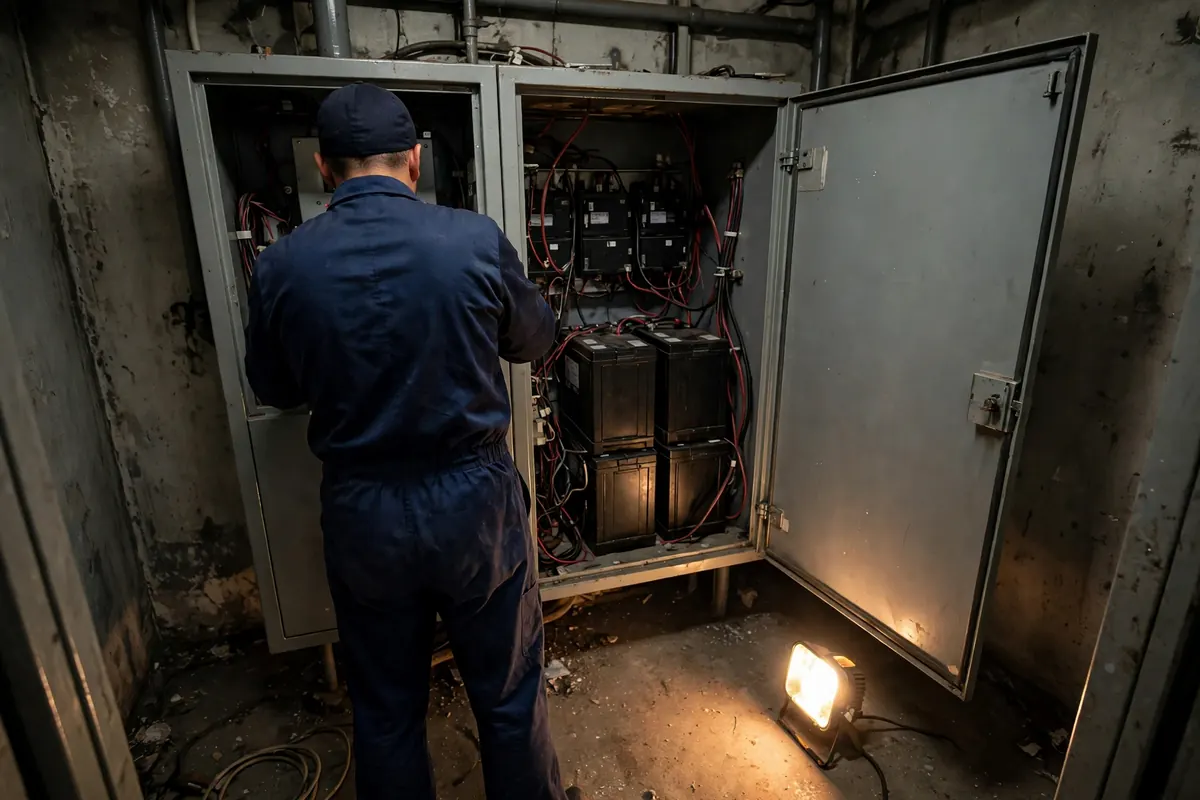
An ARD, or Automatic Rescue Device, is a battery powered unit fitted to the elevator. When the mains fails, the ARD takes over, moves the cabin slowly to the nearest floor, and opens the doors so passengers can step out safely. It is the single most useful upgrade for power cuts in Lebanon.
How an ARD works, step by step
The ARD watches the mains supply all the time. The moment the supply fails, it switches to its own batteries and takes control of the lift. It releases the brake in a controlled way, moves the cabin at a slow rescue speed to the nearest landing, levels the floor, and opens the doors. The whole rescue takes about a minute, and the passenger walks out on their own. No one needs to be rescued by a technician.
What an ARD does not do
An ARD is a rescue device, not a full power supply. It moves the lift once, to the nearest floor, and then the lift stays out of service until the mains or the generator returns. It does not keep the elevator running normally through a long cut. That is the job of a generator or a larger battery backup system. Knowing this difference helps you pick the right solution for your building.
Which lifts can get an ARD
Most modern traction lifts and many machine room less lifts can take an ARD. Older lifts can usually be fitted too, as part of a controller upgrade. The right unit depends on the lift type, the load, and the number of floors. A free site survey is the only honest way to confirm what your lift needs, because no two installations are the same.
Battery Backup vs Generator: Which One Fits Your Building?
Battery backup and generators solve different parts of the same problem. A battery backup rescues passengers and keeps the lift safe during a cut, while a generator restores full power so the lift can keep running normally. Many buildings in Lebanon need both.
Battery backup
Battery backup, including the ARD, runs on stored power. It is silent, starts at once, and needs no fuel. It is ideal for the rescue: getting passengers out safely when the power fails without warning. Its limit is capacity. A battery can move the lift to the nearest floor, but it cannot run the lift up and down all day.
Generator
A generator burns fuel to make electricity, and it can run the lift normally for as long as it has fuel. The catch is the delay. A generator takes seconds to start and stabilise, and the lift waits until the supply is steady. The lift also needs a clean, stable supply, so the generator and the changeover panel must be sized and set up for elevator loads, not just lights and sockets.
Which one fits which building
A small residential building with a short daily cut often does well with an ARD and battery backup alone. A hospital, a mall, or a tall tower needs a generator as well, because the lift must keep serving every floor through long cuts. The honest answer depends on your building: how long the cuts last, how many floors the lift serves, and how many people depend on it. That is what a site survey settles.
Can Solar Power Keep an Elevator Running in Lebanon?
Solar can help, but it cannot run an elevator on its own. Solar panels charge batteries during the day, and those batteries can support the lift during a cut, but the panels, the inverter, and the battery bank must be sized for the lift’s high starting load, which is far larger than a home solar system.
How solar helps
In Lebanon, sunshine is one thing we do not lack. Solar panels on the roof can charge a battery bank through the day, and that stored power can feed the ARD or the backup system when the mains fails. For buildings that already have solar, linking it to the lift backup is a sensible step, and it cuts generator fuel use.
The limits of solar for lifts
An elevator motor draws a large surge of power when it starts, much more than lights, fridges, or phone chargers. A home solar setup will not carry that load. The inverter must be sized for the lift, the batteries must hold enough charge for several rescues, and the system must be installed by people who understand elevator control. Solar is a support for the backup system, not a replacement for it.
What a survey checks
Before anyone promises a solar powered lift, a survey should check the lift’s motor size, the daily cut pattern, the roof space for panels, and the battery capacity needed. If the numbers do not add up, the honest answer is to pair a smaller solar setup with an ARD and a generator, rather than overselling solar alone.
What Happens If You Get Stuck in an Elevator During a Power Cut?
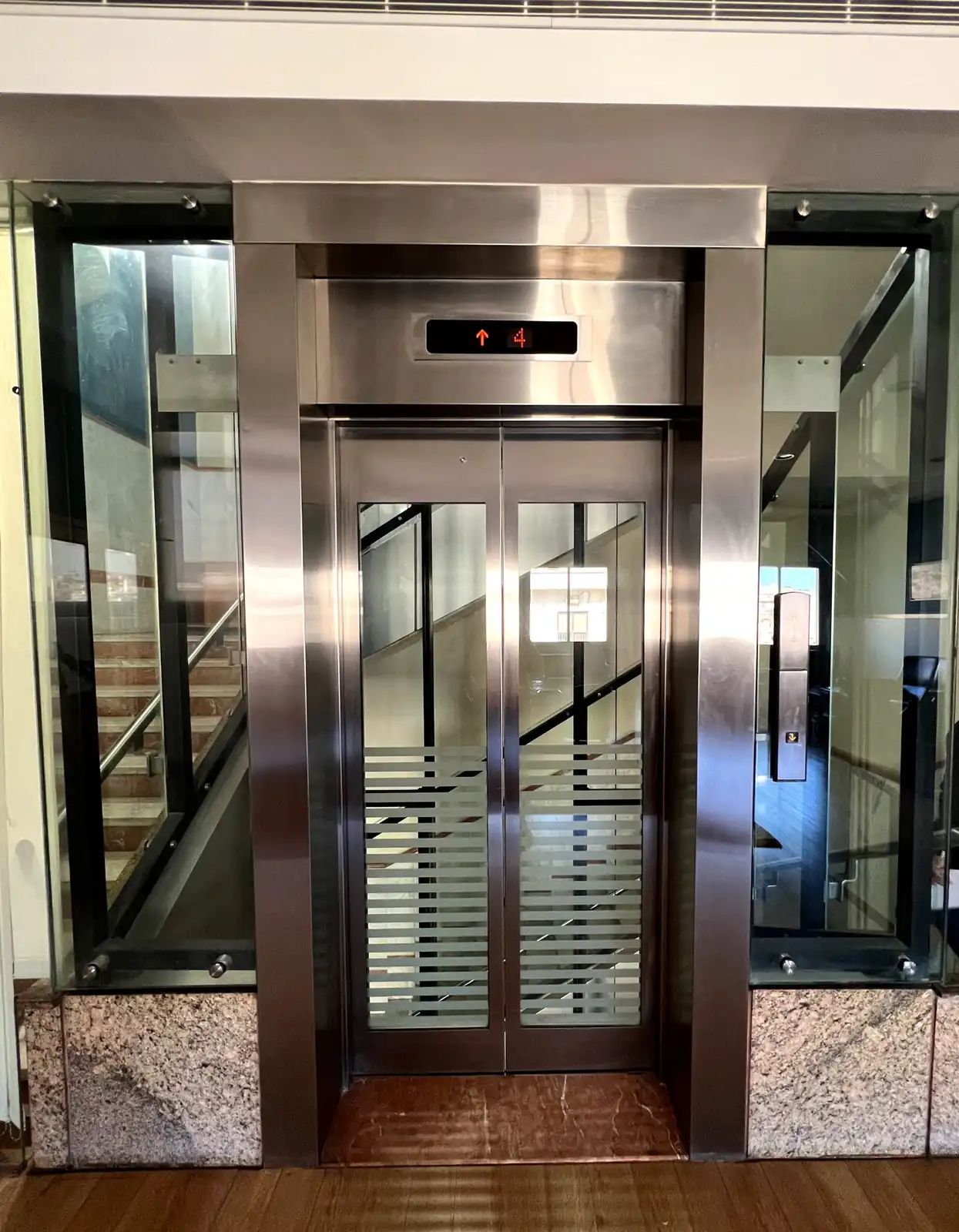
If you get stuck in an elevator during a power cut, stay calm, press the alarm button, and wait for help. The cabin has emergency light and air, and the lift is designed to hold you safely. Never try to force the doors open or climb out on your own.
Stay calm and use the alarm
Press the alarm button or the intercom and tell the building caretaker or the emergency line where you are. Ecolift answers its 24/7 emergency line day and night, so help is a phone call away on +961 3 534 595. Our target is to reach your building within 45 minutes on weekdays and 120 minutes on weekends and holidays. While you wait, sit down, breathe slowly, and keep the alarm pressed at intervals so the building knows you are there.
What the rescue looks like
If the lift has an ARD, you will not wait at all: the device moves the cabin to the nearest floor and opens the doors. If it does not, a technician will come, restore power to the lift or wind it manually to the nearest floor, and open the doors from outside. Either way, the rescue is calm and routine for a trained technician.
What never to do
Never force the doors open. The gap between the cabin and the landing can be a drop, and the lift can move without warning when power returns. Never try to climb out through the ceiling hatch. Never let children press buttons or pull at the doors. Wait for the doors to open at a proper floor, and step out only when the cabin is level with the landing.
How Does the Generator Switchover Work for Elevators?
When the mains fails, the building’s changeover panel detects the loss, starts the generator, waits for its voltage to stabilise, and then switches the elevator supply to the generator. The lift stays stopped until the supply is steady, then it runs normally on generator power.
The switchover in seconds
The changeover is automatic in most modern buildings. The generator starts within seconds, and the panel switches the load once the voltage and frequency are stable. The lift controller then checks the supply and, if it is clean, returns the lift to service. The whole sequence usually takes less than a minute, but the lift will not move a second earlier, because a rough supply can damage the controller.
Why the lift waits
A generator that is still speeding up produces uneven voltage. If the lift started on that supply, the motor could strain and the controller could fault. So the lift waits. This is normal, and it is why a building with a slow or undersized generator still sees the lift stop for a while at the start of every cut, even though the lights come back quickly.
Keeping the switchover healthy
The changeover panel, the generator, and the lift controller must be checked together, not separately. Regular elevator maintenance in Lebanon includes checking how the lift behaves on generator supply, and a maintenance visit is the right time to test the switchover before a real cut exposes a fault. Ecolift maintains more than 1200 units across 700+ buildings, so our technicians see every type of generator setup in the country.
What Does It Cost to Add ARD or Battery Backup to Your Elevator?
The cost of adding an ARD or battery backup to your elevator in Lebanon depends on the lift type, the number of floors, the load, and whether the controller needs an upgrade too. There is no single price, so the honest answer is a free site survey and a written quote for your exact lift.
What changes the price
A small home lift needs a smaller unit than a heavy passenger lift in a tower. A modern controller may only need the ARD itself, while an older lift may need a controller upgrade first. The battery size, the wiring, and the time on site all play a part. That is why no serious company quotes a fixed price for this work without seeing the lift.
What is included in a survey
A survey checks the lift type, the controller, the motor, the existing wiring, and the building’s power setup. It also checks whether the lift already has any rescue device, and whether the generator supply reaches the lift at all. You get a clear answer on what your lift needs and what it will cost, before any work starts.
How maintenance cover helps
Lifts under a maintenance contract get their backup systems checked at every visit. Batteries age, and an ARD with dead batteries is no help in a real cut. Our four maintenance plans, Ascend, Elevate, Summit, and Pinnacle, cover different levels of care, and the right plan keeps the rescue system tested and ready. If you are comparing options, our guide to elevator annual maintenance contracts in Lebanon explains what each level includes.
How to Get Power Cut Protection for Your Elevator in Lebanon?
Getting power cut protection for your elevator is a short process: book a free site survey, get a written quote for the ARD or battery backup your lift needs, and book the installation. Ecolift installs and maintains rescue systems on elevators from every brand, including lifts installed by other companies.
Step 1: Book a free site survey
Call +961 3 534 595 or send a message through our contact page and tell us your building, the lift type, and how long your power cuts usually last. We will arrange a visit at a time that suits the building.
Step 2: Get a written quote
After the survey, you get a written quote for the exact unit your lift needs, with no hidden extras. The quote covers the ARD or battery backup, the fitting, and the testing. If your lift needs a controller upgrade first, the quote will say so plainly.
Step 3: Book the installation
Installation usually takes a single visit. Our technicians fit the unit, wire it into the controller, test the rescue several times, and show the caretaker how it works. The lift is out of service only while the work is being done, and we schedule it to suit the building.
Power cuts in Lebanon are not going away soon, but getting stuck in a lift because of them is a solved problem. An ARD, a healthy battery, and a generator that is set up properly will keep your building moving through every cut. If your lift still stops and leaves people waiting between floors, the fix is a survey away. Ecolift serves buildings across Beirut and Lebanon, from home elevators in Lebanon and indoor stair lifts to platform lifts in Beirut and escalator maintenance. Call +961 3 534 595 and get your lift protected before the next cut.