

Blog
10 Warning Signs Your Elevator Needs Professional Repair
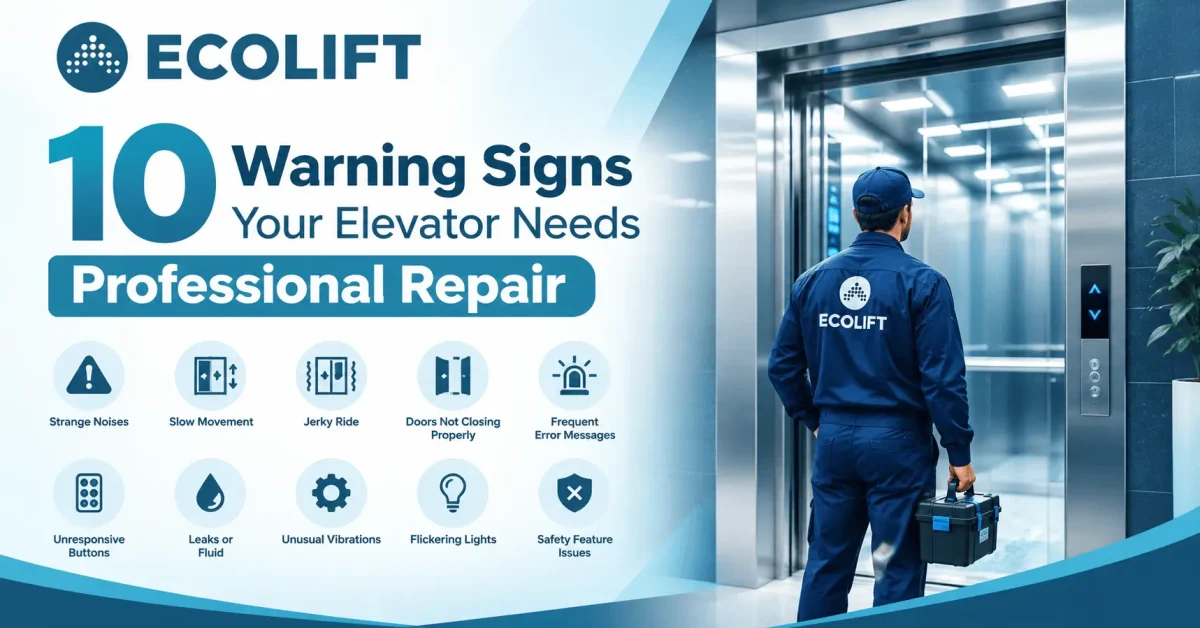
Property owners and facility managers depend on consistent vertical transportation to maintain building operations. While modern elevator systems are engineered for continuous use, mechanical wear, electrical degradation, and component fatigue eventually affect performance. Identifying early indications of wear allows building managers to address developing issues before they cause total system failure or safety hazards. This article examines specific signs that an elevator requires professional assessment and repair.
Abnormal noises during operation
Elevators should operate with minimal noise. While a faint hum from the motor room or the quiet sound of doors opening is normal, new or loud noises often indicate mechanical problems.
Squeaking or grinding sounds often originate from the guide rails, which require precise alignment and proper lubrication. When the sliding guide shoes or roller guides wear down, metal-on-metal contact can occur. Clanking sounds from the hoistway may indicate loose counterweight components or problems with the suspension ropes. A persistent whining noise from the motor room can signal issues with the machine bearings or a drive failure. Ignoring these sounds can lead to extensive damage to the rails, ropes, or the main drive machine.
Uneven leveling at floors
An elevator cabin must stop flush with the floor landing to provide safe access for passengers and freight. When a cabin consistently stops slightly above or below the landing, a leveling problem exists.
Leveling issues pose a significant tripping hazard. In older systems, uneven stops often result from worn brake linings or issues with the leveling switches in the hoistway. In modern traction elevators with variable frequency drives, poor leveling may indicate a problem with the drive parameters or the position encoder. Technicians must inspect the braking system, adjust the leveling sensors, and verify the drive settings to restore precise alignment.
Sluggish or erratic door operation
Elevator doors are the most frequently used components in the entire system and account for a high percentage of service calls. A door that opens slowly, closes with excessive force, or stutters during movement requires attention.
Door operators rely on belts, tracks, rollers, and motors to function smoothly. Worn door rollers can cause the panels to drag or catch in the tracks. A failing door operator motor or drive may lack the torque necessary to move the doors at the correct speed. Additionally, if the electronic door edges or infrared light curtains are dirty or failing, the doors may repeatedly reopen without cause. Proper door function is critical for passenger safety and efficient traffic flow.
Increased wait times and slow travel speeds
A noticeable decrease in elevator performance affects building efficiency. Passengers may experience longer wait times after pressing a hall call button, or the cabin may travel between floors more slowly than usual.
Increased wait times can result from problems in the control system. The group controller, which dispatches cars to specific floors, relies on accurate signals from hall stations and cabin sensors. A relay failure or a software error can disrupt the dispatching logic, causing cars to bypass floors or respond inefficiently. A reduction in travel speed might indicate a problem with the main drive or a deliberate safety response by the controller to a detected fault. A diagnostic review of the control system is necessary to identify the cause of reduced performance.
Frequent unexpected shutdowns
An elevator that stops working and requires a reset to resume operation is experiencing intermittent faults. While a system may temporarily recover, frequent shutdowns indicate a developing problem that will likely lead to a permanent failure.
Modern elevator controllers use microprocessors that monitor numerous safety circuits and operational parameters. If a sensor detects an anomaly, such as a slight overspeed condition or a door lock failure, the controller will shut down the system to protect passengers. Recurring faults can be caused by loose wiring connections, degrading electronic components, or mechanical issues triggering safety switches. Technicians use diagnostic tools to read fault codes stored in the controller’s memory to isolate the root cause.
Noticeable vibrations or jerky movements
A smooth ride is a primary indicator of a well-maintained elevator system. Passengers should not experience significant vibration, shaking, or jerky stops and starts.
Vibrations during travel often point to worn roller guides on the cabin or counterweight. If the suspension ropes are worn unevenly or if the traction sheave grooves are degraded, the movement will transfer vibration to the cabin. Jerky starts and stops are typically related to the motor control system or the braking mechanism. A failing solid-state drive or incorrect tuning parameters can cause the motor to accelerate or decelerate unevenly. A technician will assess the mechanical components and the drive system to eliminate vibration.
High energy consumption
An unexplained increase in a building’s electricity usage can sometimes be traced to a malfunctioning elevator system. While elevators are significant power consumers, a sudden spike indicates inefficiency.
High energy use can result from a failing motor that requires more current to operate or a drive system that is no longer operating optimally. In older motor-generator sets, continuous operation even when the elevator is idle wastes significant energy. Modernizing an older system with a regenerative drive or upgrading to an alternating current gearless machine can reduce power consumption. If energy bills rise without a clear cause, testing the elevator’s power draw can identify electrical inefficiencies.
Problems with the emergency communication system
Every elevator must have a functioning emergency communication system that allows passengers to contact help if they become trapped. If this system fails, the elevator should not remain in service.
The emergency phone must connect directly to a reliable answering service or building security. Testing the phone regularly is a standard maintenance procedure. A dead phone, static on the line, or a failure to connect indicates a problem with the wiring, the phone unit, or the building’s telephone line. In Lebanon, where power outages can affect building systems, ensuring the emergency phone has an adequate battery backup is essential.
Changes in cabin lighting and displays
Flickering lights or malfunctioning floor displays within the cabin may seem like minor inconveniences, but they can indicate electrical issues.
Cabin lighting and displays receive power through the traveling cable, a flexible cable that connects the moving cabin to the stationary controller in the machine room. Over time, the internal wires of the traveling cable can break due to constant bending. Flickering lights or intermittent display failures are often the first signs of traveling cable degradation. A technician will inspect the cable and the cabin’s electrical connections to resolve these issues.
Expired or missed maintenance intervals
Elevator systems require systematic maintenance to function correctly. A lack of regular service is a primary cause of premature component failure and increased repair costs.
Maintenance schedules depend on the equipment type, age, and usage patterns. Technicians clean components, lubricate moving parts, adjust mechanisms, and test safety circuits during these visits. If a building manager notices that service visits have been missed or if the equipment has not been inspected within the recommended timeframe, professional assessment is necessary.
Choosing a service provider in Lebanon
Addressing elevator repair requires specialized knowledge and access to correct components. Building managers in Lebanon must select contractors capable of diagnosing complex mechanical and electronic faults.
Ecolift Elevator provides installation, maintenance, repair, and modernization services throughout Lebanon. The company has operated for more than 50 years, with over 5,000 units installed and more than 750 buildings under active contract. Ecolift supplies genuine spare parts and provides 24/7 emergency response for elevator systems. Technicians assess wear, perform necessary repairs, and supply components such as cabins, doors, and finishes for complete elevator systems.
Recognizing the early signs of elevator wear allows property owners to schedule repairs before systems fail completely. Addressing noises, leveling issues, erratic door operation, and electrical problems maintains building efficiency and passenger safety. Consistent observation and professional assessment remain the most effective methods for managing elevator systems.