Moving Walkways Travelators
Where and why are the travelators useful?
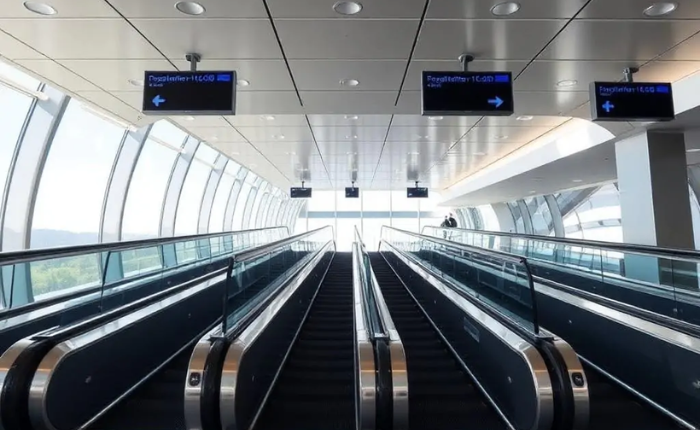
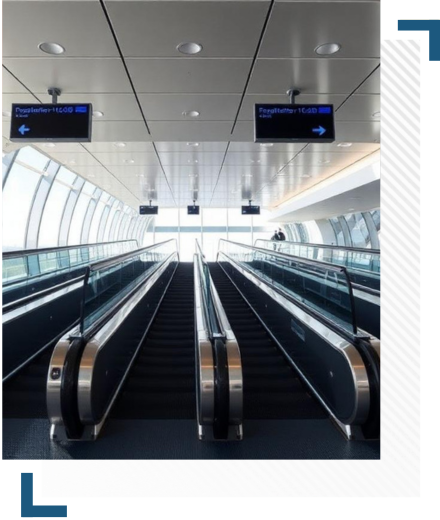
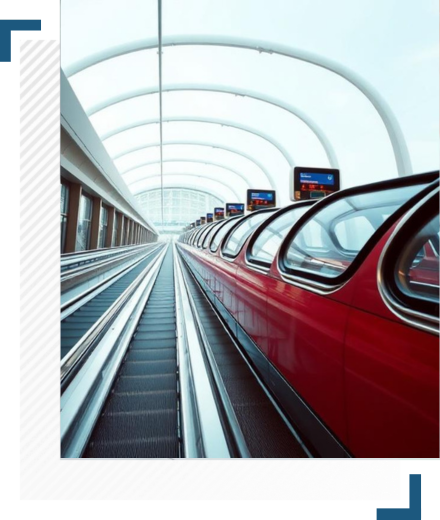
Travelers are useful for the ease of people. Mostly, it’s useful for people who work with low stamina. These travelators are also called moving sidewalks, autowalks, and moving pavement. They work at lower and smoother distances to transport people over long distances. These are the horizontal ones that transport the people us, usually along the inclined or on the flat surfaces.
Purpose and usage
Travelers are useful for the ease of people. Mostly, it’s useful for people who work with low stamina. These travelators are also called moving sidewalks, autowalks, and moving pavement. They work at lower and smoother distances to transport people over long distances. These are the horizontal ones that transport the people us, usually along the inclined or on the flat surfaces.
Installation of Travelators
Travelators are designed to use in commercial or in places. However, the common locations for the Installation of the travelators are as follows:
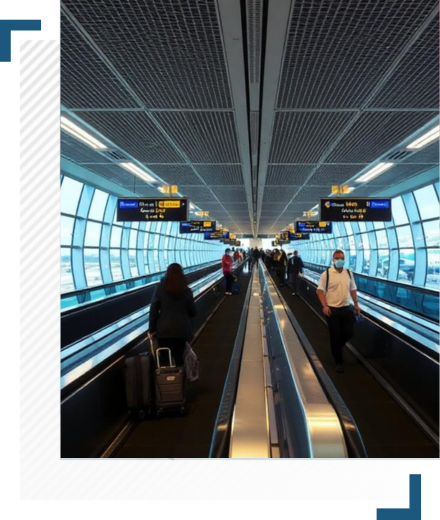
- Airports
- Public Transport Hubs
- Exhibition Halls


Why Choose US?
With over 50 years in business, Ecolift Elevators has been helping customers all over Lebanon with reliable and quality Elevator/Escalator services. Our team is skilled and always ready to give you the service that fits your needs, whether it’s installing, repairing, or handling emergencies. We know elevators are a big investment, so we make sure our prices stay fair without cutting corners on safety or quality.

50+ Years of Expertise
With decades of experience, Ecolift has built a reputation for delivering reliable, high-quality elevator solutions you can
trust
Highly Skilled Team
Our experienced technicians know their craft inside and out, and they’ll handle your elevator with precision and care.
Emergency Services
You can count on us around the clock. Our emergency services are available whenever you need assistance, giving you peace of mind.
Comprehensive Maintenance Plans
We’ve got you covered with maintenance that keeps your elevator running smoothly and prevents costly
breakdowns.
Personalized Service
Your needs are unique, and so is our approach. We tailor each project to ensure you get the perfect solution, from installation to ongoing care.
Affordable Pricing
We offer cost-effective options without cutting corners on quality, giving you great value for your
investment.
What exactly is a travelator?
A travelator is a conveyor mechanism that carries pedestrians across level or gently inclined surfaces — the horizontal counterpart to an escalator. Passengers step onto a stable moving deck and are carried forward at a constant, controlled speed, cutting down long walks without any extra effort.
also known as
autowalk
moving walkway
travelator
moving sidewalk
PART OF THE FAMILY
Elevator vertical
Escalator inclined
Travelator horizontal
Same engineering family, different job: a travelator moves people forward, not up — ideal wherever distance, not height, is the obstacle.
How a travelator works
A continuous pallet or belt loops around a closed track, driven by an electric motor and gearbox, with a handrail moving in sync for balance.
Step on
Comb plates guide you onto a stable, level platform moving at walking pace.
Ride
The deck and handrail move together at a constant, synchronized speed.
Step off
Matching comb plates at the far end guide you off safely, at the same pace.
Two ways to lay a travelator
We engineer each system around your site's incline, distance and expected traffic — pallet-type for wheeled loads, belt-type for a quieter continuous ride.
0° incline
For flat-surface transport across long, level distances — airport concourses, mall corridors, exhibition floors.
Best For:
Wheeled luggage, trolleys, wheelchairs
Deck Type:
Pallet or belt
Typical Sites:
Airports, malls, exhibition halls
up to ~12° incline
For a gentle rise or fall between levels, where a full staircase or escalator isn't practical.
Best For:
Level changes without stairs
Deck Type:
Pallet, cleated for grip
Typical Sites:
Parking structures, metro stations
Where travelators earn their keep
Anywhere footfall is constant and distances are long, a travelator changes how a building feels to move through.
01
Airports:
Connecting terminals, gates and baggage claim with less transit fatigue.
02
Shopping malls:
Moving shoppers between wings and levels, trolleys and pushchairs included.
03
Hospitals:
Supporting patients, visitors and staff along long clinical corridors.
04
Hotels & resorts:
Linking lobbies, conference centers and parking for guests with luggage.
05
Exhibition halls:
Managing high-density crowd flow during events and trade shows.
06
Transport hubs:
Connecting platforms, concourses and exits where commuter volume is constant.
07
Parking structures:
Bridging the distance between parking levels and building entrances.
08
Office towers:
Moving staff and visitors efficiently across large ground-floor lobbies.
Safety isn't an add-on – it's engineered in
A travelator carries a constant stream of people and luggage. Every system we install is built and commissioned to European safety standards, by our own engineers, never subcontracted.
Anti-slip treads:
Ridged decking for secure footing in all traffic conditions.
Synchronized handrail:
Moves at exactly the same speed as the walking surface.
Emergency stop:
Positioned at both ends for immediate shutdown when needed.
Comb & gap sensors:
Detect obstructions at the step-off point and stop the unit automatically.
Automatic braking:
Brings the walkway to a controlled halt in the event of a fault.
Overload monitoring:
Watches motor load continuously to prevent strain and downtime.
Runs efficiently, too
Variable-speed drives and standby modes ease off during quiet hours and ramp back up as footfall increases – lower running costs without touching passenger safety or comfort.
From first survey to years of service
We handle the full lifecycle of a moving walkway in-house — the same way the walkway itself carries you, start to finish, without a handoff.
01
Site survey & consultation
We assess foot traffic, available floor space, structural load and intended use before recommending a configuration.
02
Custom design & engineering
Each system is designed around your building's dimensions, incline and expected passenger volume.
03
Installation
Our in-house technical team installs and commissions the system, coordinating with architects and contractors as needed.
04
Maintenance contracts
Scheduled lubrication, belt and pallet inspection, sensor testing and motor checks catch wear before it becomes a breakdown.
05
Modernization & retrofit
Older systems are upgraded with modern drives, updated sensors and efficient motors — often without full replacement.
06
Emergency repair
A stalled travelator disrupts an entire facility. Our response team diagnoses and resolves faults quickly.
Trusted across Lebanon for a reason
50+
Years of expertise
Five decades in the elevator and escalator business, trusted by facility managers across Lebanon.
In-house
No subcontractors
The same team that surveys your site designs, installs and services your system.
Beirut
Spares stocked locally
Critical components on hand, so repairs don't wait on parts to clear customs.
24/7
Emergency line
Facilities that never close can't afford a walkway that's down for days.
Tailored
Not templated
Every quote and design reflects your building's actual traffic, layout and budget.
Fair
Transparent pricing
Honest, competitive pricing without cutting corners on safety or build quality.
Frequently Asked Questions
Find quick answers to the most common questions about our products, services, and process. We’re here to make everything simple and easy for you.
What size elevator does a commercial building in Lebanon actually need?
It depends more on floors served and peak-hour foot traffic than on building type alone. A boutique office might only need a small passenger cabin; a hospital or hotel usually needs a higher-capacity car plus a separate service elevator. We size this during a free site survey rather than quoting a number sight unseen.
Do Ecolift's commercial elevators meet recognized safety standards?
Installations are designed and carried out in line with European EN 81 lift safety standards the same reference point applied across Ecolift’s escalator installations covering door protection, overspeed governors, and emergency communication.
What happens to the elevator during a power outage?
Commercial installations include backup power that automatically brings the cabin to the nearest floor and opens the doors, so a blackout doesn’t leave anyone stuck between floors.
Can you install a machine-room-less elevator in an older building that wasn't built with a shaft?
In many cases, yes. MRL systems need less overhead clearance and no dedicated machine room, which is why they’re the usual recommendation for retrofitting elevators into older Beirut commercial buildings.
What's included in a commercial maintenance contract?
Scheduled inspections, priority emergency call-out, and access to locally stocked spare parts, carried out by Ecolift’s own technicians rather than a subcontractor. Full details are on the Elevator Maintenance page.
How long does installing a commercial elevator take?
It depends on whether it’s new construction or a retrofit, and how many floors are served. A project-specific schedule is confirmed after the site survey, not before it.
Can one elevator handle both passengers and goods, or do we need two separate systems?
Hotels and hospitals often run a passenger bank alongside a separate service elevator sized for carts, deliveries, or beds, so passenger and service traffic don’t compete for the same car. We help decide which setup a building needs during the site survey.