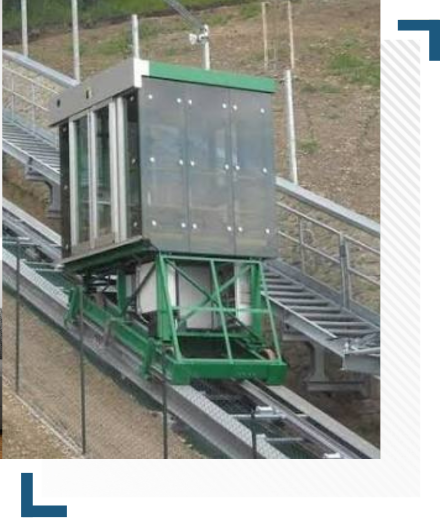
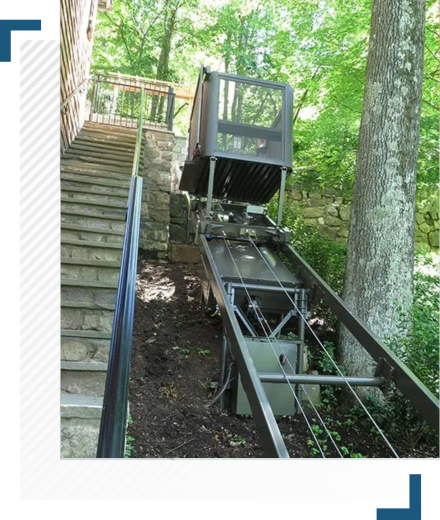
Inclined Lift
Inclined Lift installation, maintenance, and repair services in Lebanon
The main purpose of inclined lifts is to make it easier for users to move from inclines or steep hillsides with minimal effort. It’s recommended and safe for seniors and disabled people to transport heavy loads and goods between two points safely.
Purpose and usage
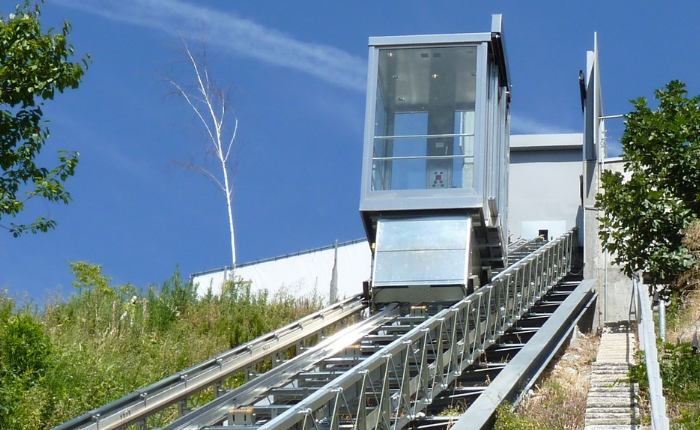
The inclined Lift or elevator works like a cable railway. The elevator consists of one or two inclined tracks. It moves independently up and down the slope. These are mostly installed outside of homes, and they can withstand conditions such as strong winds, snow, heat, sun, salt, and sea.
Types of Inclined Lifts
Inclined lifts are the types of lifts that are safe and secure for users and can be used for transportation easily. Following are the different types of inclined lifts;
- Inclined Platform lifts
- Vertical platform wheelchair lifts


Why Choose US?
With over 50 years in business, Ecolift Elevators has been helping customers all over Lebanon with reliable and quality Elevator/Escalator services. Our team is skilled and always ready to give you the service that fits your needs, whether it’s installing, repairing, or handling emergencies. We know elevators are a big investment, so we make sure our prices stay fair without cutting corners on safety or quality.
50+ Years of Expertise
With decades of experience, Ecolift has built a reputation for delivering reliable, high-quality elevator solutions you can
trust
Highly Skilled Team
Our experienced technicians know their craft inside and out, and they’ll handle your elevator with precision and care.
Emergency Services
You can count on us around the clock. Our emergency services are available whenever you need assistance, giving you peace of mind.
Comprehensive Maintenance Plans
We’ve got you covered with maintenance that keeps your elevator running smoothly and prevents costly
breakdowns.
Personalized Service
Your needs are unique, and so is our approach. We tailor each project to ensure you get the perfect solution, from installation to ongoing care.
Affordable Pricing
We offer cost-effective options without cutting corners on quality, giving you great value for your
investment.
What is an inclined lift?
An inclined lift sometimes called an inclined platform lift or slope lift is a passenger or wheelchair platform that travels along a fixed rail set directly onto an incline, staircase, or hillside. Unlike a standard elevator, which moves straight up through a vertical shaft, it follows the existing gradient of the land, allowing installation with minimal structural excavation.
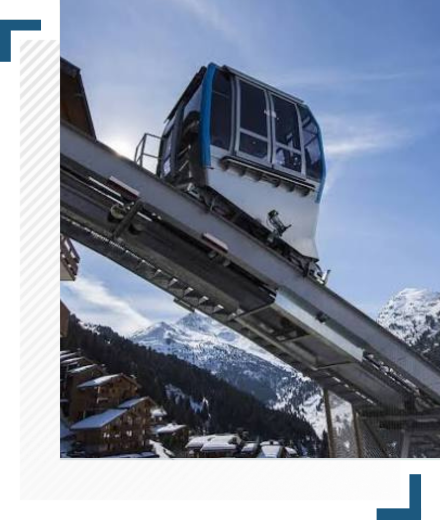
Mechanically, it works similarly to a funicular railway. A drive unit at either the top or bottom of the track moves the platform using either:
A geared rack-and-pinion system
A cable-and-winch mechanism
The platform remains level throughout the journey, ensuring passengers, wheelchair users, or loaded trolleys stay stable, even on steep slopes.
Since most inclined lifts are installed outdoors, they are designed to withstand:
Sun,Rain,Wind Coastal salt air . Temperature fluctuations
Key Features
Fixed track on the slope , Drive unit (top or bottom) , Level-riding platform

Types of inclined lifts we install
Every site is assessed based on the slope, usage, and users before recommending the most suitable configuration.
Inclined platform lifts
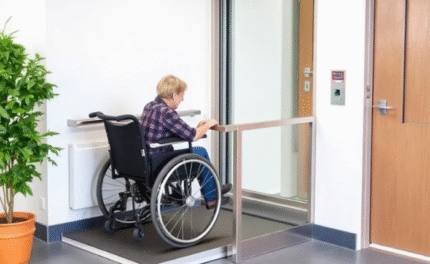
An open or enclosed platform large enough for a person standing or seated, often sized for a wheelchair plus a companion.
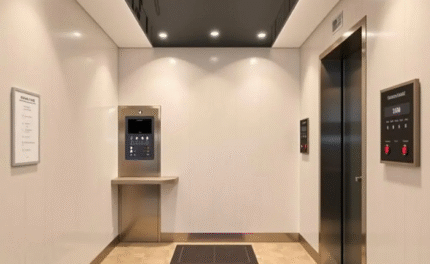
Usage/Application: The most common choice for private homes with sloped gardens or driveways, and for hotel grounds, resorts and terraced commercial properties.
Vertical platform wheelchair lifts
Used where the change in level happens over a shorter, steeper run — a flight of exterior steps or a short embankment.
Mechanism: These operate on the same principle but are configured for tighter spaces and more compact rises.
Wherever a change in ground level is a barrier
Inclined lifts are ideal where slopes, staircases, or terraces limit safe accessibility.
Private homes on sloped land
Connecting a driveway or entrance gate to the front door, or a garden to a terrace, for family members with reduced mobility.
Hillside & coastal villas
Common across Lebanon, where natural terrain creates staircases and steep paths between garden levels.
Hotels & resorts
Moving guests between pool decks, terraces and gardens without long detours or unsafe stair use.
Commercial & institutional sites
Clinics, schools and mixed-use buildings that need to meet accessibility expectations across outdoor level changes.
Public & semi-public spaces
Waterfront promenades, viewpoints and stepped public areas where accessibility is a genuine requirement.
Why choose an inclined lift over a conventional elevator?
For a parent carrying a sleeping toddler, someone recovering from surgery, or a grandparent who has decided stairs are no longer worth the risk, three flights can be the difference between staying in a beloved home and being forced to sell it. A home elevator solves that permanently built into the architecture, not bolted on as an afterthought.
01
Lower structural impact
The lift follows the existing gradient rather than requiring a vertical shaft cut through multiple floors, so installation is typically less invasive and faster than building an elevator shaft from scratch.
02
Built for the outdoors
Weather-resistant components, corrosion-resistant materials for coastal exposure, and covers where needed — so the equipment holds up to years of outdoor use rather than degrading after one winter.
03
Genuine accessibility
For elderly residents, wheelchair users and anyone with limited mobility, it removes a real daily obstacle — the difference between independence and depending on someone else to navigate stairs.
04
Practical for loads too
Beyond passengers, inclined platforms move shopping, garden equipment or trolleys between levels without carrying them up a staircase by hand.
Supported through every stage of ownership
From the first site survey to years of scheduled maintenance — carried out by our own in-house engineers, not subcontractors.
A free, on-site inspection
Our engineers measure the gradient, assess ground conditions, check for obstacles or drainage issues along the proposed track, and talk through how you and the people using the lift will actually use it day to day.
You'll get a clear recommendation on platform type, track routing, and an honest estimate — no guesswork, no generic quote pulled from a catalogue.
Handled entirely in-house
Once a design is agreed, our own technical team — not third-party subcontractors — handles the full installation: track foundation and anchoring, rail alignment, drive unit setup, electrical connection and platform commissioning.
We test every safety system before handover and walk you through how to operate the lift safely.
Consistent care for outdoor equipment
Outdoor equipment exposed to weather needs more consistent attention than an indoor lift, and a slope lift that's neglected is a slope lift that eventually fails when you need it most.
Our maintenance contracts include scheduled inspections, lubrication and adjustment of the drive and track system, testing of safety brakes and sensors, and a full service report after every visit.
Treated as urgent, always
If your lift stops working, we treat it as urgent — particularly when it's the only accessible route someone in your household relies on.
Our repair technicians carry common spare parts stocked in Beirut and respond across Lebanon, backed by an emergency line for out-of-hours faults.
Upgrade rather than replace
Older inclined lifts can often be upgraded — new control systems, updated safety sensors, refreshed platforms, or more energy-efficient drive units.
If your existing lift is aging or was installed by another company, we'll assess it and tell you honestly whether modernization or full replacement makes more sense.
Tested at commissioning. Re-tested every visit.
Every installed inclined lift includes built-in safety features suitable for year-round outdoor use.
Emergency stop
Stops the platform immediately at any point along the track.
Safety-edge sensors
Automatically stop the platform if an obstruction is detected.
Anti-slip surface
Provides secure footing in all weather conditions.
Secure loading barriers
Protect users at loading points throughout the travel path.
Fail-safe braking
Keeps the platform securely in place during a power interruption.
Frequently Asked Questions
Find quick answers to the most common questions about our products, services, and process. We’re here to make everything simple and easy for you.
What size elevator does a commercial building in Lebanon actually need?
It depends more on floors served and peak-hour foot traffic than on building type alone. A boutique office might only need a small passenger cabin; a hospital or hotel usually needs a higher-capacity car plus a separate service elevator. We size this during a free site survey rather than quoting a number sight unseen.
Do Ecolift's commercial elevators meet recognized safety standards?
Installations are designed and carried out in line with European EN 81 lift safety standards the same reference point applied across Ecolift’s escalator installations covering door protection, overspeed governors, and emergency communication.
What happens to the elevator during a power outage?
Commercial installations include backup power that automatically brings the cabin to the nearest floor and opens the doors, so a blackout doesn’t leave anyone stuck between floors.
Can you install a machine-room-less elevator in an older building that wasn't built with a shaft?
In many cases, yes. MRL systems need less overhead clearance and no dedicated machine room, which is why they’re the usual recommendation for retrofitting elevators into older Beirut commercial buildings.
What's included in a commercial maintenance contract?
Scheduled inspections, priority emergency call-out, and access to locally stocked spare parts, carried out by Ecolift’s own technicians rather than a subcontractor. Full details are on the Elevator Maintenance page.
How long does installing a commercial elevator take?
It depends on whether it’s new construction or a retrofit, and how many floors are served. A project-specific schedule is confirmed after the site survey, not before it.
Can one elevator handle both passengers and goods, or do we need two separate systems?
Hotels and hospitals often run a passenger bank alongside a separate service elevator sized for carts, deliveries, or beds, so passenger and service traffic don’t compete for the same car. We help decide which setup a building needs during the site survey.